In the world of art acquisitions, there is a dangerous seduction in the phrase "hand-painted for less." When searching for a 20th-century masterpiece to anchor a room, you will inevitably encounter "factories" offering what look like bargains—$250 replicas that promise the moon.
But in the luxury market, a bargain is often the most expensive mistake you can make. Here is why discerning collectors choose the Paolo Gallery, and why the "cheapest option" is a gamble your interior cannot afford.
1. The "Ghost" vs. The Physical Presence
Most "cheap" competitors utilize a process called "Enhanced Canvas." They print a digital image onto a low-grade polyester canvas and have a worker spend 30 minutes adding a few "tactile" brushstrokes on top.
-
The Competitor: You are buying a printed photograph with a few drops of paint. It is a "ghost" of a painting—flat, soulless, and visually thin.
-
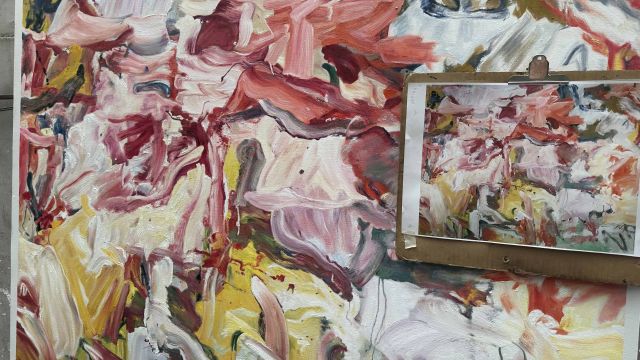
The Atelier: We utilize the Hybrid Precision Method. While we use a proportional map for 1:1 geometrical DNA, every single millimeter of the surface is covered in 15–20 layers of physical French oil. When the light hits our canvas, it doesn't hit ink; it hits the depth of real pigment.
2. Materials: Architectural Integrity vs. "Disposable" Decor
A painting is a chemical object. If the chemistry is cheap, the painting dies.
-
The Support: Cheap competitors use synthetic polyester or low-grade linen that hasn't been properly seasoned. Within 3–5 years in a US climate, these canvases sag, warp, or develop "crazing" (micro-cracks).
-
Our Support: We exclusively use Fine-Grain Italian Cotton. It is selected for its architectural stability and "low-drag" surface. It is built to remain under tension for a century.
-
The Pigment: "Factory" paint often uses high levels of filler and low-grade lead, which fades under LED or natural light. We use Pébéo Fragonard-grade oils from France. These are museum-rated pigments designed to maintain their "glow" for 75+ years.
3. The Geometry of Accuracy
In a Picasso or a Lempicka, a millimeter is the difference between a masterpiece and a caricature.
-
The Competitor: Low-cost studios rely on "freehand" speed. Proportions are often distorted—eyes are misaligned, hands are "rubbery," and the soul of the master is lost.
-
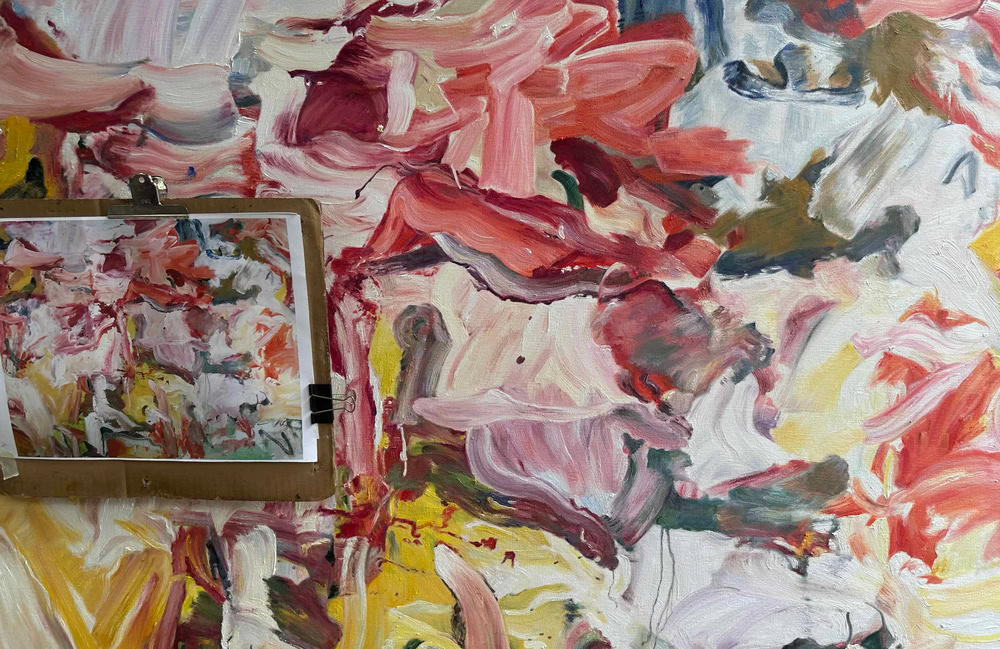
The Atelier: Our 30-year legacy is built on mathematical fidelity. Our mapping protocol ensures that the "skeleton" of the work is identical to the original. We spend weeks on the "under-painting" before the first finish-layer is even applied.
4. The "Zero-Seizure" Security
When you buy "cheap" art from an unknown factory, you are the one taking the legal and logistical risk.
-
The Competitor: Ships via standard mail with vague descriptions. Many of these works are seized by US Customs due to trademark issues or improper documentation, leaving the buyer with a loss and no recourse.
-
The Atelier: We have a 30-year unblemished record. We understand the HTS 9701.10.00 protocol perfectly. We handle the "Safe-Passage" logistics so your work arrives at your door as a legal, duty-free fine art study. You aren't just paying for paint; you are paying for the certainty of delivery.
5. The Designer’s Reputation
For architects and designers, specifying a "cheap" painting is a risk to their brand. If a painting begins to yellow or sag in a client's $10 million home, the designer’s credibility is damaged.
We are the "insurance policy" for the trade. Professionals work with us because they know the Technical Spec Sheet we provide is backed by 30 years of physical proof.
The Verdict
A "cheap" painting is an expense that loses value the moment it arrives. An Atelier Master Study is an asset—a physical legacy that honors the artist, the architecture, and the collector.
Price is a one-time conversation. Quality is a 30-year relationship.