Free and safe Shipping
| Size | Museum Quality Artworks Hand-Painted with oil paint |
|---|---|
| 23.6 x 18 in 60x47 cm |
$ 494.00 Add to Cart |
| 32 x 24 in 80x63 cm |
$ 707.00 Add to Cart
|
| 40 x 31 in 100cm x 79 cm |
$ 994.00 Add to Cart |
| 4 x 3.1 ft or 47 ¼ x 37 in 120cm x 94 cm |
$ 1264.00 Add to Cart |
| 5 x 3.9 ft or 59 x 46 in 150cm x 118 cm |
$ 1736.00 Add to Cart |
| 6.6 x 5.2 ft or 78 ¾ x 61 in 200cm x 157 cm |
$ 2639.00 Add to Cart |
| 8.16 x 6.5 ft or 98 ½ x 77 in 250cm x 197 cm |
$ 3448.00 Add to Cart |
| 9.8 x 7.7 ft 300cm x 236 cm |
$ 4956.00 Add to Cart |
| 13.12 x 10.3 ft 400cm x 315 cm |
$ 8820.00 Add to Cart |
| 16.4 x 12.9 ft 500cm x 393 cm |
$ 13755.00 - 20% off $ 11004.00 Add to Cart |
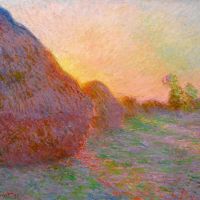
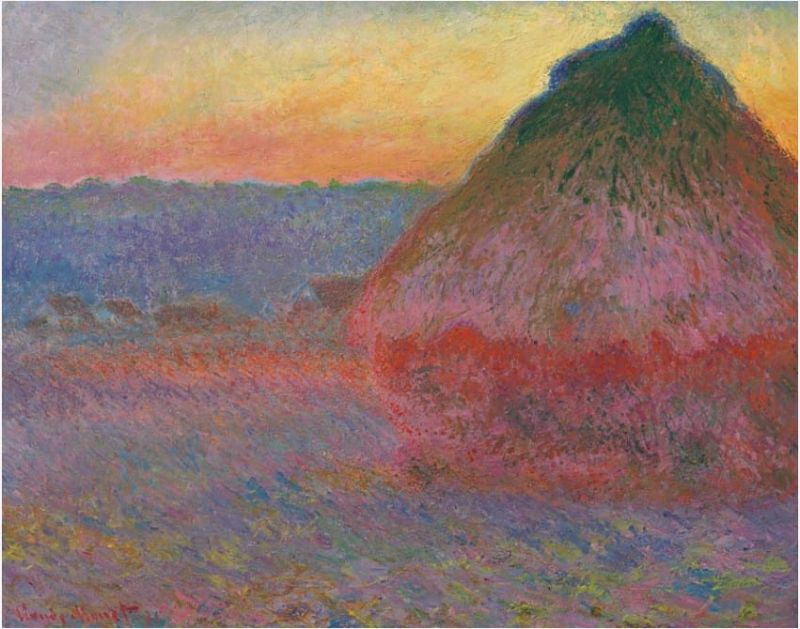
Museum-quality hand-painted artwork Claude Monet Meule 1891
Museum-quality replicas by Paolo: Exceptional product, accurate to the tiniest details, textures and values. Requires skills and time to process, but gives astonishing results. A true work of art for the real connoisseurs.
Buy Claude Monet Meule 1891 museum quality
Meule (1891): Monet’s Symphony of Light and Color
Claude Monet’s Meule (1891) is a profound study of the ephemeral nature of light. Part of his famous Haystacks series, this work depicts a single grainstack in a field near Giverny at sunset. By choosing a mundane agricultural object as his subject, Monet shifted the focus of art away from "what" is being painted to "how" light interacts with the world.
Artistic Analysis & SEO Keywords
-
The Sunset Glow: The painting is dominated by a warm, radiant palette of pinks, oranges, and fiery reds, contrasted by the cool violets and deep blues of the shadows.
-
Atmospheric Envelope: Monet was obsessed with the "envelope"—the atmospheric conditions (mist, sun, haze) that surround an object. In Meule, the stack seems to vibrate against the hazy, golden sky.
-
Complex Texture: The surface of the haystack is composed of thousands of tiny, layered brushstrokes. Monet used broken color to allow the viewer's eye to mix the hues, creating a luminosity that a flat wash of color could never achieve.
-
The "Serial" Approach: This was one of 25 canvases where Monet painted the same stacks in different seasons and times of day, proving that an object's color is never fixed but constantly shifting with the light.
Historical Significance
The Haystacks series was a massive commercial and critical success. When it was exhibited in 1891, it solidified Monet’s reputation as the leader of the Impressionist movement. These paintings were a major influence on future abstract artists, including Wassily Kandinsky, who cited seeing a Meule as the moment he realized art didn't need to be representational to be powerful.