Free and safe Shipping
| Size | Museum Quality Artworks Hand-Painted with oil paint |
|---|---|
| 23.6 x 19 in 60x50 cm |
$ 525.00 Add to Cart |
| 32 x 25 in 80x66 cm |
$ 739.00 Add to Cart
|
| 40 x 32 in 100cm x 83 cm |
$ 1047.00 Add to Cart |
| 4 x 3.2 ft or 47 ¼ x 38 in 120cm x 99 cm |
$ 1330.00 Add to Cart |
| 5 x 4.1 ft or 59 x 48 in 150cm x 124 cm |
$ 1824.00 Add to Cart |
| 6.6 x 5.4 ft or 78 ¾ x 64 in 200cm x 165 cm |
$ 2772.00 Add to Cart |
| 8.16 x 6.8 ft or 98 ½ x 81 in 250cm x 207 cm |
$ 3623.00 Add to Cart |
| 9.8 x 8.1 ft 300cm x 248 cm |
$ 5208.00 Add to Cart |
| 13.12 x 10.9 ft 400cm x 331 cm |
$ 9268.00 Add to Cart |
| 16.4 x 13.5 ft 500cm x 413 cm |
$ 14455.00 - 20% off $ 11564.00 Add to Cart |
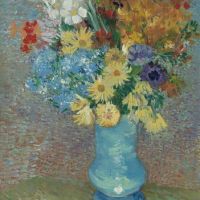
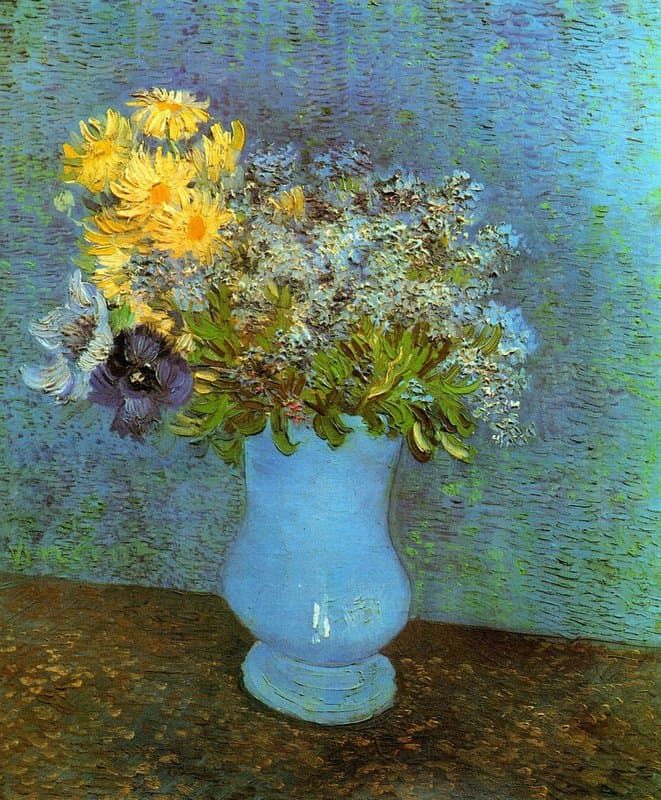
Museum-quality hand-painted artwork Van Gogh, Vase With Lilacs Daisies And Anemones
Museum-quality replicas by Paolo: Exceptional product, accurate to the tiniest details, textures and values. Requires skills and time to process, but gives astonishing results. A true work of art for the real connoisseurs.
Buy Van Gogh, Vase With Lilacs Daisies And Anemones museum quality
This delicate and luminous still life, titled "Vase with Lilacs, Daisies, and Anemones," was painted by Vincent van Gogh in the summer of 1887. Created during his stay in Paris, it highlights a critical moment in his career when he began to master the use of light and vibrant color harmonies.
-
Title: Vase with Lilacs, Daisies, and Anemones (Vase avec lilas, marguerites et anémones)
-
Artist: Vincent van Gogh
-
Date: Summer 1887
-
Medium: Oil on canvas
-
Dimensions: 46.5 cm x 37.5 cm
1. Mastery of Pastel Tones: Unlike the fiery yellows of his Arles period or the dark browns of his Dutch period, this work showcases a rare, soft pastel palette. The dominance of sky blue, lavender, and pale yellow creates a serene, airy atmosphere. This was likely influenced by his growing interest in the light-drenched works of Claude Monet and other Impressionists.
2. Contrast and Composition:
-
The Blue Vase: The pale blue vase acts as a cooling anchor for the composition. Interestingly, Van Gogh used the same vase for several other studies during this time, often experimenting with how different floral colors interacted with its smooth, curved surface.
-
Complementary Yellows: The bright yellow daisies in the upper-left corner provide a sharp visual contrast to the blue-violet tones of the lilacs and anemones, a classic example of Van Gogh using complementary color theory to make a painting "sing."
3. Expressive Background: The background is not a flat wall but a shimmering field of short, horizontal blue and green strokes. This technique, a nod to Pointillism and Divisionism, creates an "aura" around the flowers, making them feel as though they are vibrating with life.
4. The Transition to Modernism: This painting is a perfect record of Van Gogh's "Parisian education." You can see him moving away from realism toward a style where the brushstroke itself becomes part of the subject. The thick impasto on the petals gives the bouquet a physical presence that makes it feel fresh and "just picked."