Free and safe Shipping
| Size | Museum Quality Artworks Hand-Painted with oil paint |
|---|---|
| 23.6 x 18 in 60x47 cm |
$ 494.00 Add to Cart |
| 32 x 24 in 80x62 cm |
$ 693.00 Add to Cart
|
| 40 x 30 in 100cm x 78 cm |
$ 984.00 Add to Cart |
| 4 x 3.1 ft or 47 ¼ x 36 in 120cm x 93 cm |
$ 1250.00 Add to Cart |
| 5 x 3.8 ft or 59 x 45 in 150cm x 116 cm |
$ 1705.00 Add to Cart |
| 6.6 x 5.1 ft or 78 ¾ x 61 in 200cm x 155 cm |
$ 2604.00 Add to Cart |
| 8.16 x 6.4 ft or 98 ½ x 76 in 250cm x 194 cm |
$ 3395.00 Add to Cart |
| 9.8 x 7.6 ft 300cm x 233 cm |
$ 4893.00 Add to Cart |
| 13.12 x 10.2 ft 400cm x 310 cm |
$ 8680.00 Add to Cart |
| 16.4 x 12.7 ft 500cm x 388 cm |
$ 13580.00 - 20% off $ 10864.00 Add to Cart |
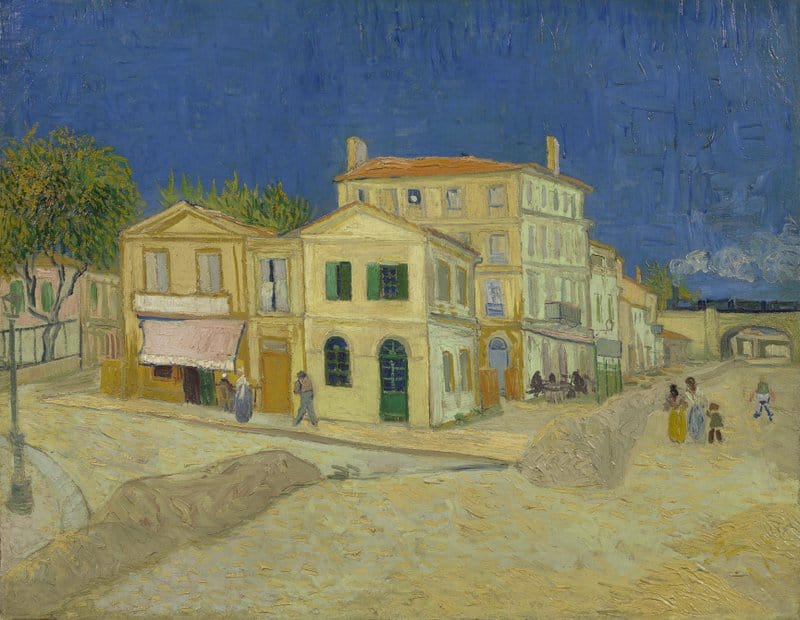
Museum-quality hand-painted artwork Van Gogh, The Yellow House
Museum-quality replicas by Paolo: Exceptional product, accurate to the tiniest details, textures and values. Requires skills and time to process, but gives astonishing results. A true work of art for the real connoisseurs.
Buy Van Gogh, The Yellow House museum quality
Painted in September 1888, "The Yellow House" (originally titled The Street) is one of the most autobiographical works by Vincent van Gogh. It depicts his home at 2 Place Lamartine in Arles, France, which he dreamed of turning into a "Studio of the South"—a collaborative hub for like-minded artists.
-
Title: The Yellow House (La Maison Jaune) / The Street (La Rue)
-
Artist: Vincent van Gogh (1853–1890)
-
Date: September 1888
-
Medium: Oil on canvas
-
Dimensions: 72 cm x 91.5 cm
-
Location: Van Gogh Museum, Amsterdam
1. A Dream of Community: The "Yellow House" was more than just a building; it was a symbol of Vincent's hope for stability and friendship. He rented the right-hand wing of the building (marked by the green shutters). His bedroom was on the first floor behind the shutters, the very room depicted in his famous Bedroom in Arles.
2. Color Palette and Symbolism:
-
Yellow and Blue: The painting is built on the high-contrast pairing of the sun-drenched yellow of the buildings and the intense cobalt blue of the Mediterranean sky. For Van Gogh, yellow often symbolized warmth, friendship, and the "sulfur sun" of the South.
-
Light: The bright, shadowless lighting reflects the blistering heat of a Provençal afternoon, using the flat color areas typical of his interest in Japanese prints.
3. Compositional Details:
-
The Surroundings: On the left is the restaurant where Van Gogh ate daily. To the right, the street leads toward a railway bridge, with a train puffing smoke in the distance—a symbol of the modernity creeping into the rural South.
-
The Inhabitants: Small, scattered figures move through the square, giving the scene a sense of everyday "neighborhood" life. The piles of dirt in the foreground indicate that the street was undergoing construction at the time.
4. Historical Fate: Tragically, the Yellow House no longer exists. It was severely damaged by an Allied bombing raid during World War II in 1944 and later demolished. This painting, along with a few sketches, serves as the primary visual record of the place where Van Gogh and Paul Gauguin had their famous and volatile artistic collaboration.