Free and safe Shipping
| Size | Museum Quality Artworks Hand-Painted with oil paint |
|---|---|
| 23.6 x 22 in 60x58 cm |
$ 774.00 Add to Cart |
| 32 x 30 in 80x77 cm |
$ 861.00 Add to Cart
|
| 40 x 38 in 100cm x 97 cm |
$ 1222.00 Add to Cart |
| 4 x 3.8 ft or 47 ¼ x 45 in 120cm x 116 cm |
$ 1558.00 Add to Cart |
| 5 x 4.8 ft or 59 x 57 in 150cm x 145 cm |
$ 2132.00 Add to Cart |
| 6.6 x 6.3 ft or 78 ¾ x 75 in 200cm x 193 cm |
$ 3241.00 Add to Cart |
| 8.16 x 7.9 ft or 98 ½ x 95 in 250cm x 242 cm |
$ 4235.00 Add to Cart |
| 9.8 x 9.5 ft 300cm x 290 cm |
$ 6090.00 Add to Cart |
| 13.12 x 12.7 ft 400cm x 387 cm |
$ 10836.00 Add to Cart |
| 16.4 x 15.8 ft 500cm x 483 cm |
$ 16905.00 - 20% off $ 13524.00 Add to Cart |
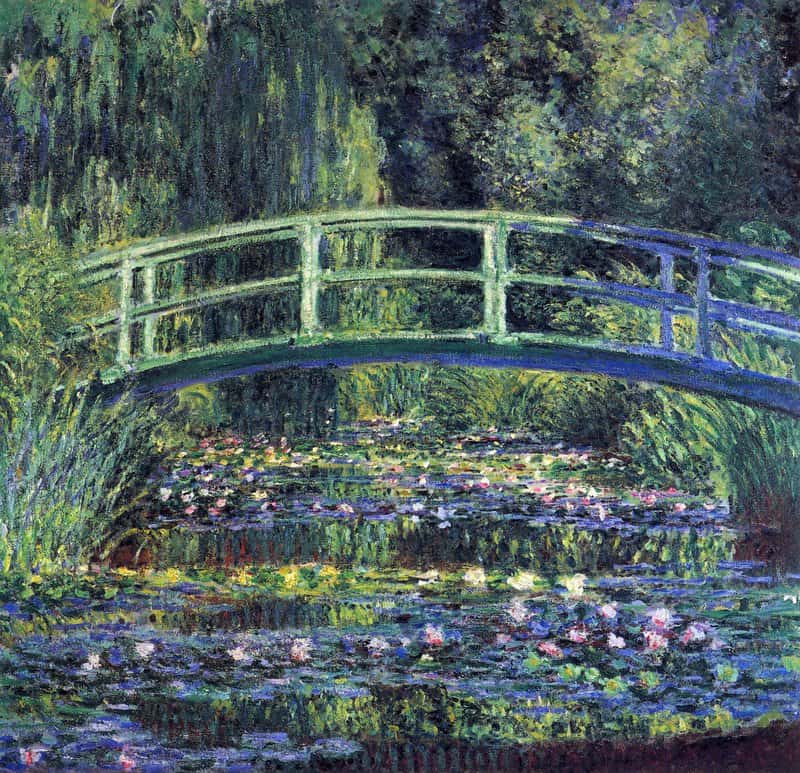
Museum-quality hand-painted artwork Claude Monet, The Water-Lily Pond (1899)
Museum-quality replicas by Paolo: Exceptional product, accurate to the tiniest details, textures and values. Requires skills and time to process, but gives astonishing results. A true work of art for the real connoisseurs.
Buy Claude Monet, The Water-Lily Pond (1899) museum quality
This specific version is "The Water-Lily Pond" (1899), one of the most famous works from Claude Monet's first series of his water garden at Giverny. While he painted this bridge many times, the 1899 National Gallery version is the definitive "classic" that solidified his reputation for Japonisme and intricate garden design.
The Water-Lily Pond (1899): Monet’s Japanese Bridge Masterpiece
Claude Monet’s The Water-Lily Pond (1899) is a highlight of High Impressionism. This work features the graceful, arched Japanese footbridge that Monet constructed over his lily pond in Giverny. Unlike his later, more abstract works, this 1899 painting is rich in detail, capturing a lush, enclosed world where nature and man-made structure exist in perfect harmony.
Artistic Analysis & Visual Style
-
The Shifting Perspective: Monet creates a unique visual experience where the viewer seems to look up at the bridge but down at the water lilies. This dual perspective pulls you into the scene, making the garden feel intimate and expansive at once.
-
Vertical vs. Horizontal: The painting is built on a grid of contrasts: the vertical reflections of the weeping willows and reeds provide a sharp counterpoint to the horizontal clusters of the floating lily pads.
-
A Palette of Verdant Greens: The composition is a symphony of greens—from the deep emeralds of the shaded water to the bright, sun-flecked chartreuse of the trees. Dabs of lavender, pink, and white mark the blooming lilies, adding "jewels" of light to the surface.
-
Enclosed Atmosphere: By omitting the sky and the horizon, Monet creates a sense of "claustrophobia" or total immersion. You aren't looking at a landscape; you are inside a garden sanctuary.
Historical Significance: Japonisme at Giverny
Monet was an avid collector of Japanese woodblock prints, which heavily influenced the design of this bridge. While traditional Japanese bridges were often red, Monet chose a vibrant blue-green to help the structure blend into the surrounding foliage. This 1899 series consists of 18 views of the pond, each capturing the garden in a different "mood" of summer light.