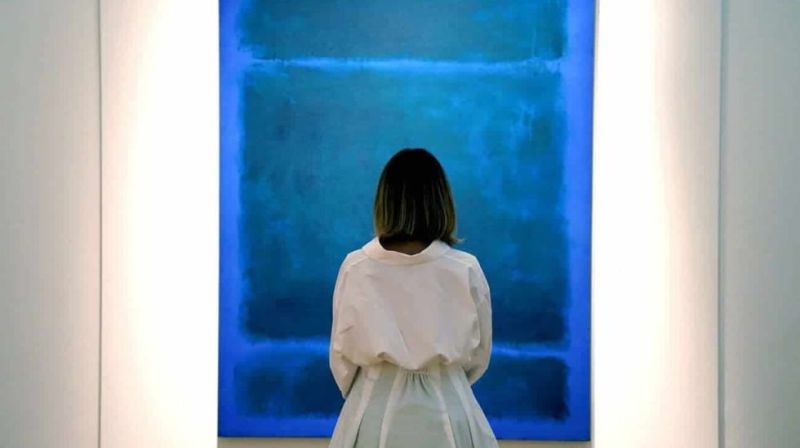
Emerging in New York in the years after World War II, Abstract Expressionism became a dominant force in modern art, centered on bold gestures, large-scale paintings, and a new freedom of expression. The movement roughly splits into two branches: the gesture-driven proponents of action painting and the meditative practitioners of color field painting. The first group is often associated with dramatic physical techniques — most famously Jackson Pollock’s drip canvases — while the second foregrounds luminous expanses of color as in the work of Mark Rothko. Willem de Kooning, who moved between figuration and abstraction, is another central figure who resists simple classification.
Scholars debate how much European modern art — German Expressionism, Cubism, and lyrical abstraction brought to the United States by exiled artists before and during World War II — shaped this largely New York–centered movement. Read on for a short timeline and a look at landmark works that defined the art world in the 1940s and 1950s.
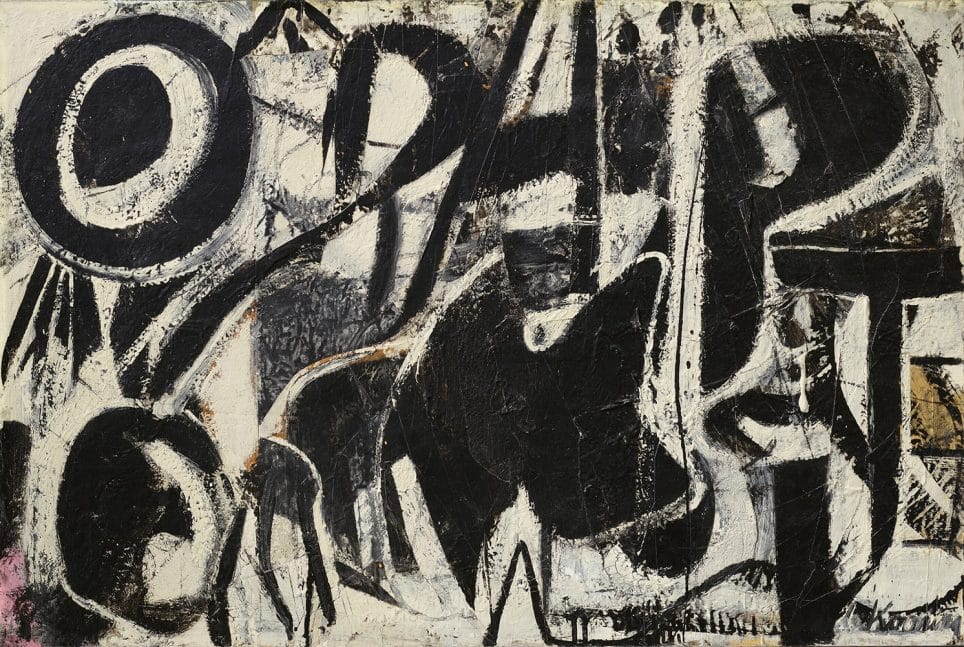
Willem de Kooning, Orestes, 1947
A painting is not the representation of an experience, it is an experience.— Mark Rothko
Abstract Expressionism in a few dates
Prewar foundations: a favorable context for modern art (1920s–1930s)
The groundwork for a modern American school was laid well before 1945. In 1929 the Museum of Modern Art opened in New York, creating a permanent institutional home for contemporary painting and sculpture. During the 1930s, New Deal programs — most notably the Works Progress Administration (WPA) federal arts projects launched in the mid-1930s — put practical support behind many American artists, while exhibitions such as MoMA’s 1936 survey helped introduce Cubism and abstraction to larger audiences. In the same decades, rising tensions in Europe prompted many masters of European modern art in exile to relocate to the United States, bringing ideas that would mingle with homegrown experimentation.
Postwar emergence and the new New York school (1940s–1950s)
Those prewar developments helped spark a more visible, if diverse, abstract scene after World War II. In 1946 critic Robert Coates used the phrase “abstract expressionism” to describe this loose group of painters who rejected traditional figurative art and emphasized intense expression through materials, color, and gesture. By the late 1940s and into the 1950s, New York had become the principal center of the movement — a shift sometimes described as the rise of the New York School — and the city’s art world engaged in lively debates about influence, style, and direction.
Around 1950 a number of artists publicly protested museum policies and curatorial choices (the so-called “Irascibles” episode), underscoring the dramatic role these artists played in reshaping institutional taste. The postwar moment also saw critics and theorists crystallize names and categories that we still use: Harold Rosenberg and Clement Greenberg emerged as two influential voices, each shaping how the movement was understood — Rosenberg focusing on the act of painting and Greenberg on formal qualities and abstraction.
What is action painting?
Often associated with Rosenberg’s writing from the early 1950s, action painting describes works in which the process — the physical gestures of the painter — becomes central to meaning. Practitioners such as Jackson Pollock, Lee Krasner, Willem de Kooning, and Robert Motherwell emphasized movement and immediacy: Pollock famously placed a canvas on the floor and used the technique of dripping, pouring and splattering paint (including industrial paints) so that the traces of the artist’s body and action fill the pictorial space. In these works the subject often becomes the very act of painting itself.
What is color field painting?
The other major current, often grouped under the term color field, stresses pictorial space made from large, luminous areas of color on expansive canvases. Champions such as Mark Rothko, Clyfford Still, and Barnett Newman pursued a flattened picture plane, minimizing illusionistic depth in favor of contemplative, immersive surfaces. Critics like Clement Greenberg promoted this formalist reading of abstract art, arguing that pure painterly qualities — color, surface, and flatness — defined the movement’s most radical achievements.
These overlapping currents — action painting’s energetic gestures and color field’s meditative expanses — together helped position New York as a new center of modern art in the post–World War II art world, influencing later movements and securing Abstract Expressionism a central place in 20th‑century art history.
Key works
Jackson Pollock, Painting (Silver on Black, White, Yellow, and Red), 1948
Context & significance: One of Pollock’s early gallery pieces from 1948, this all-over work exemplifies why he became synonymous with action painting and helped define the New York School. Technique: Pollock laid the canvas on the floor and worked from all sides, pouring and splattering paint with sticks, hardened brushes, and sometimes industrial house paints — gestures that recorded the artist’s body in motion. Why it matters: the composition abandons traditional central focus in favor of a continuous field of interlacing drips and strands, making the physical act of making the painting the principal subject. Where to see it: (confirm museum/collection listing before publication).
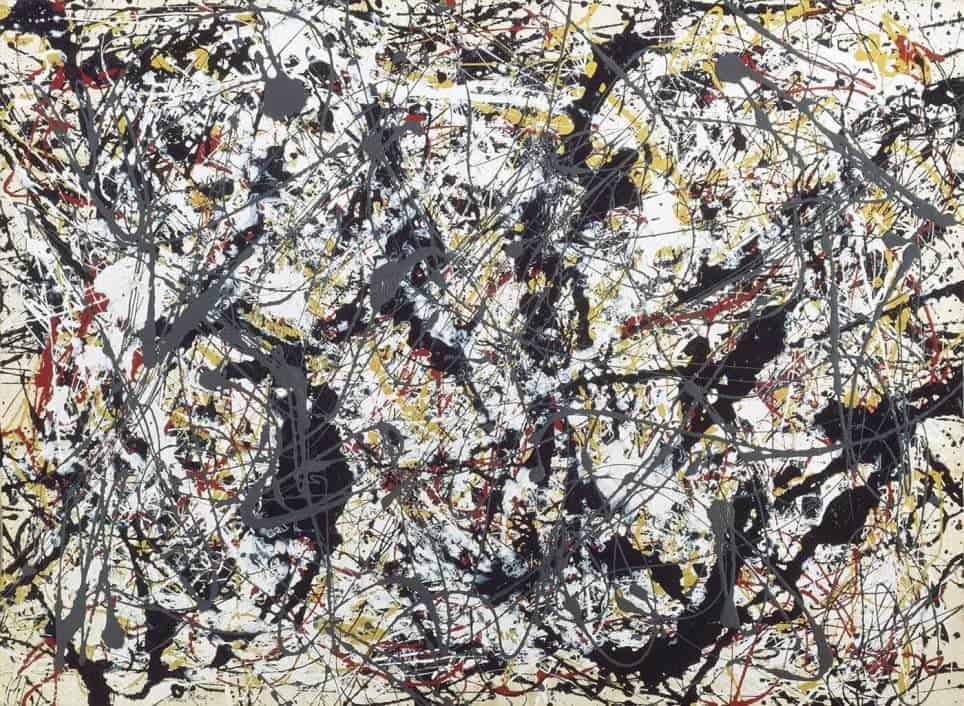
Jackson Pollock, Painting (Silver on Black, White, Yellow, and Red), 1948
Lee Krasner, Untitled, 1964
Context & significance: A major figure among abstract expressionist artists, Lee Krasner developed a powerful visual language that both complemented and distinguished her work from peers like Jackson Pollock. Technique: Krasner often applied thick passages of paint directly from the tube onto canvas or paper, working with vigorous brushwork and collage-like compositional strategies. Why it matters: this 1964 work illustrates her later, freer approach — a blend of spontaneous gesture and compositional control that bridges action painting’s energy and a more measured abstraction. Where to see it: (confirm museum/collection listing before publication).
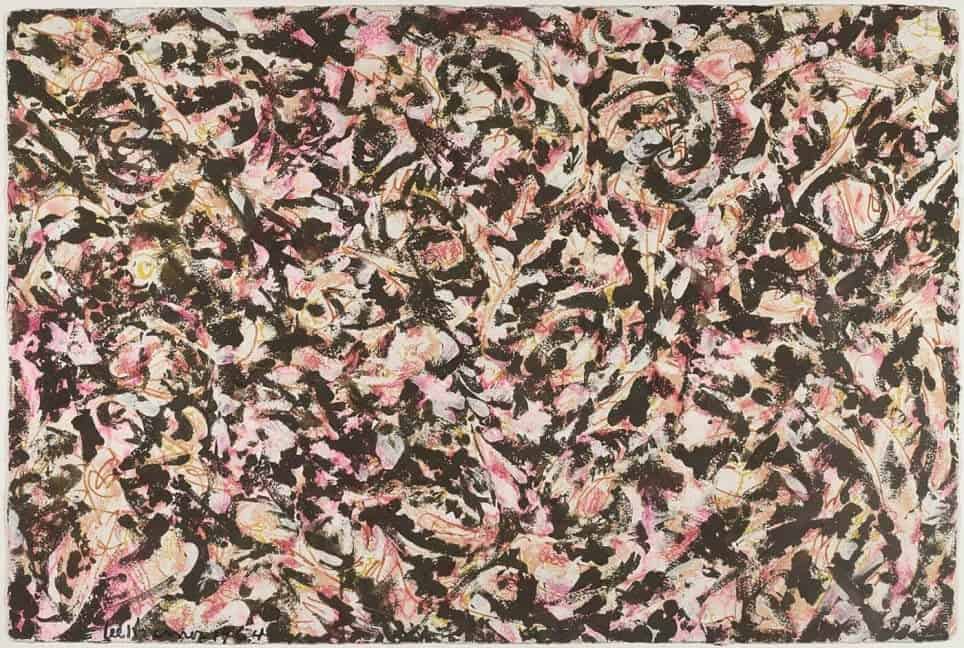
Lee Krasner, Untitled, 1964
Mark Rothko, No. 3/No. 13 (Magenta, Black, Green on Orange), 1949
Context & significance: Rothko’s late 1940s canvases mark his decisive turn to non-figurative, large-scale color compositions that would position him as a leading voice of the color field tendency. Technique: he applied thin, luminous layers of pigment to create vast rectangles of color that hover against one another, emphasizing flatness and the painting’s surface rather than illusionistic depth. Why it matters: Rothko asked viewers to have an emotional, contemplative experience in front of his paintings, using color as the primary vehicle of expression rather than narrative subject matter. Where to see it: (confirm museum/collection listing before publication).
Quick cross-reference: Pollock — action painting and bodily gesture; Krasner — energetic brushwork and evolving style; Rothko — color field and meditative canvases. Together these works show how Abstract Expressionist painters expanded the language of painting in the 1940s and 1950s, influencing later movements and reshaping the modern art world.
Want to see more? Check museum collections and exhibition catalogs for verified provenance and high-resolution images (MoMA, Tate, and major museum modern collections are good starting points).
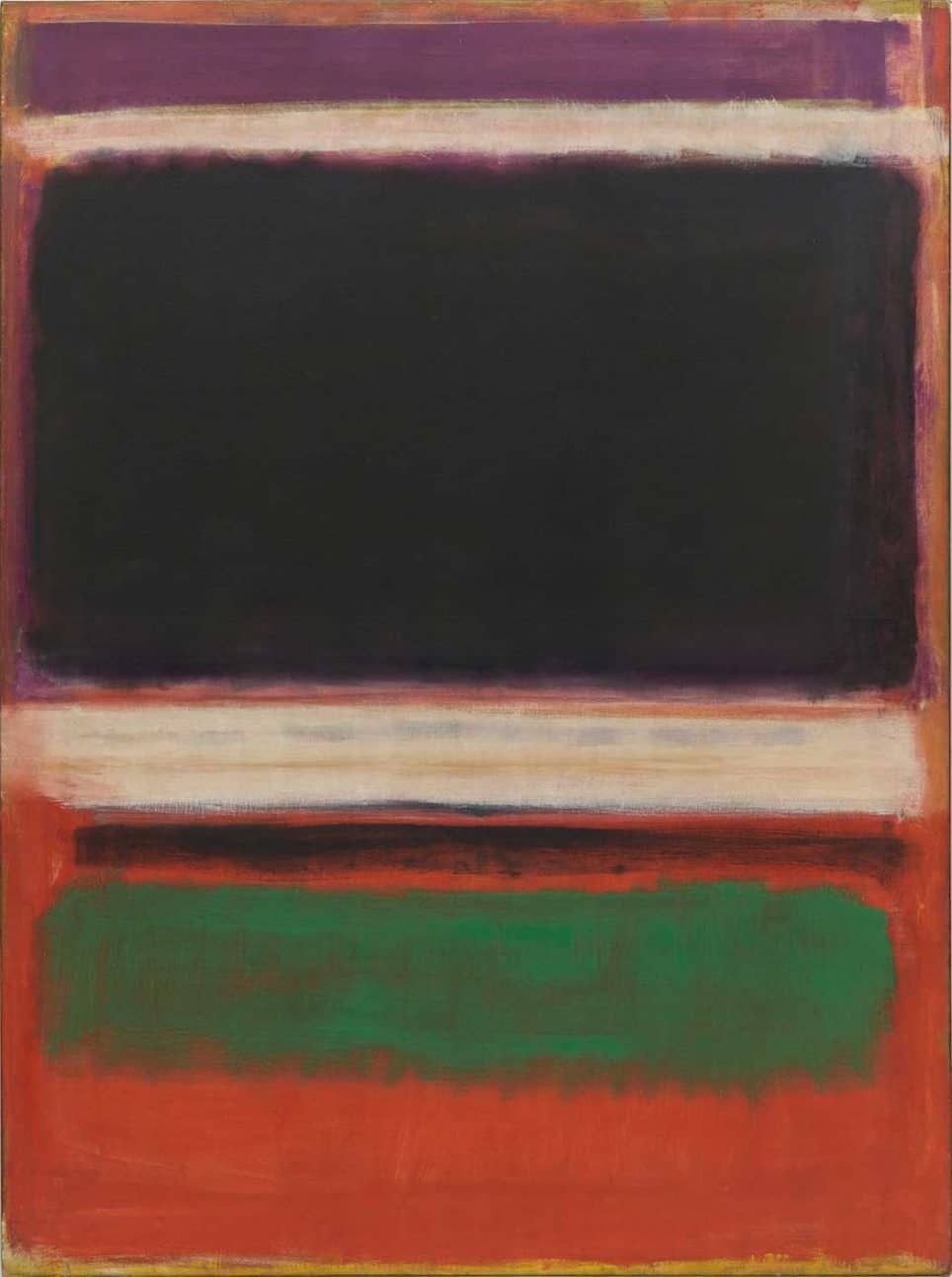
Mark Rothko, No. 3/No. 13 (Magenta, Black, Green on Orange), 1949
Legacy and influence of Abstract Expressionism
Abstract Expressionism reshaped modern art by placing process, scale, and painterly invention at the center of artistic practice. Emerging from a New York–centered scene in the decades after World War II, the movement influenced later tendencies such as Minimalism, Color Field painting, and subsequent waves of American and international painting. Its artists forced museums, collectors, and the broader art world to rethink what a painting could be.
Today you can trace that legacy in major museum modern collections — MoMA, the Whitney, Tate, and other institutions that hold canonical works by Jackson Pollock, Mark Rothko, Willem de Kooning, Lee Krasner, Barnett Newman, and others. For further reading, look to primary essays and exhibition catalogs (Harold Rosenberg, Clement Greenberg) and major retrospectives published by those museums.
Explore museum collections and trusted catalogs to confirm provenance and see high-resolution images — a practical next step for anyone wanting to study how Abstract Expressionist artists changed the course of 20th‑century art.