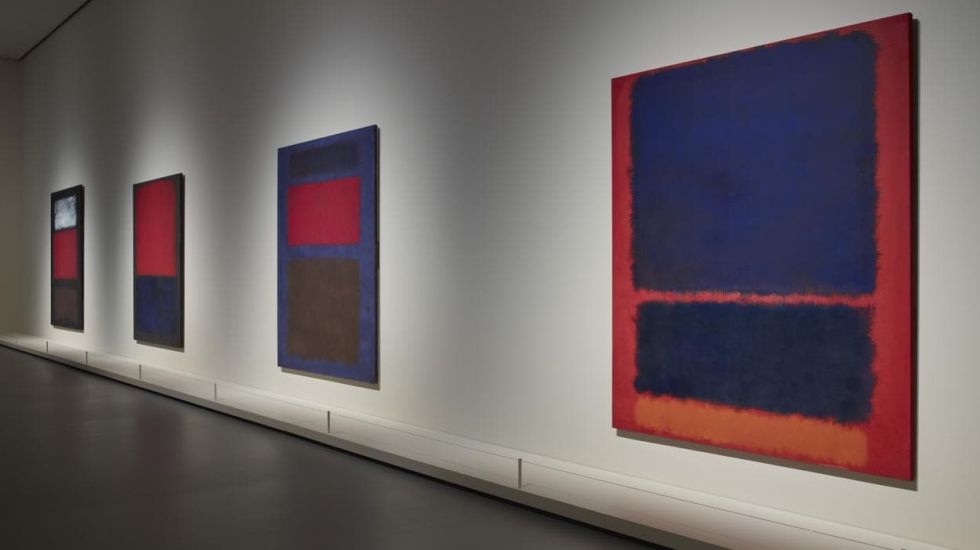
When viewers stand before a Mark Rothko painting, something extraordinary happens. Tears flow. Hearts race. Some visitors to museums report feeling overwhelmed by emotion they cannot name. These aren't reactions to recognizable images or familiar scenes. Instead, Rothko's massive canvases of floating rectangles and glowing colors create experiences that transcend ordinary art viewing. His work doesn't ask you to identify what you see. It demands you feel what cannot be spoken.
Mark Rothko Color Field paintings represent one of the most significant achievements in the history of abstract expressionism. These deceptively simple compositions of rectangular forms dissolving into luminous backgrounds changed how the world understood the meaning of Rothko paintings. The artist himself rejected the label of "abstractionist," insisting his work concerned itself with expressing basic human emotions—tragedy, ecstasy, doom. The canvases became vessels for something ancient and universal, stripped of narrative yet bursting with feeling.
The Emotional Psychology Behind Rothko's Vision
Rothko emotional resonance stems from a deliberate manipulation of color, scale, and boundary. The painter understood that art could bypass intellectual processing and speak directly to the human nervous system. His technique of layering thin washes of paint created depth that seems to pulse and breathe. The fuzzy boundaries between color blocks prevent the eye from resting, keeping viewers in a state of visual uncertainty that mirrors emotional ambiguity.
The artist once stated emphatically: "I am not an abstractionist. I'm not interested in relationships of color or form. I'm interested only in expressing basic human emotions—tragedy, ecstasy, doom, and so on." This declaration reveals the fundamental misunderstanding Rothko fought throughout his career. Critics who focused on his masterful color relationships missed his deeper purpose. The work wasn't about aesthetic pleasure. It served as a direct conduit to primal feeling.
Understanding Rothko's Color Technique
The luminosity in Rothko's paintings comes from a painstaking process. He applied multiple thin layers of pigment mixed with various binders, including egg and glue. Each layer remained partially transparent, allowing light to penetrate the surface and reflect back through the colors. This created an internal glow that cannot be replicated through photography.
The physical scale required to achieve the hovering effect proved essential to Rothko's vision. Large canvases—often exceeding eight feet in height—envelop the viewer's peripheral vision. Standing at the proper distance, typically eighteen inches from the canvas surface, the paintings fill your visual field. The external world disappears. Only color and feeling remain.
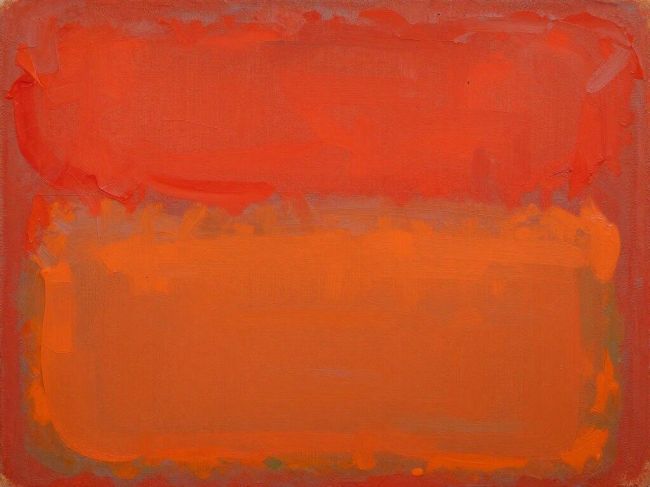
Neurological research has since confirmed what Rothko intuited. Large fields of color activate emotional processing centers in the brain before engaging analytical regions. The artist created paintings that function as emotional triggers, bypassing the viewer's defenses and reaching something more fundamental than taste or preference.
From Surrealism to Mark Rothko Color Field paintings: Rothko's Artistic Journey
The transition from surrealism to the multi-forms of the late 1940s marked a crucial turning point in the history of abstract expressionism. Rothko didn't arrive at his signature style immediately. His early years in New York produced urban scenes, subway paintings, and mythological subjects rendered in moody, figurative styles. These works showed promise but revealed an artist still searching for his voice.
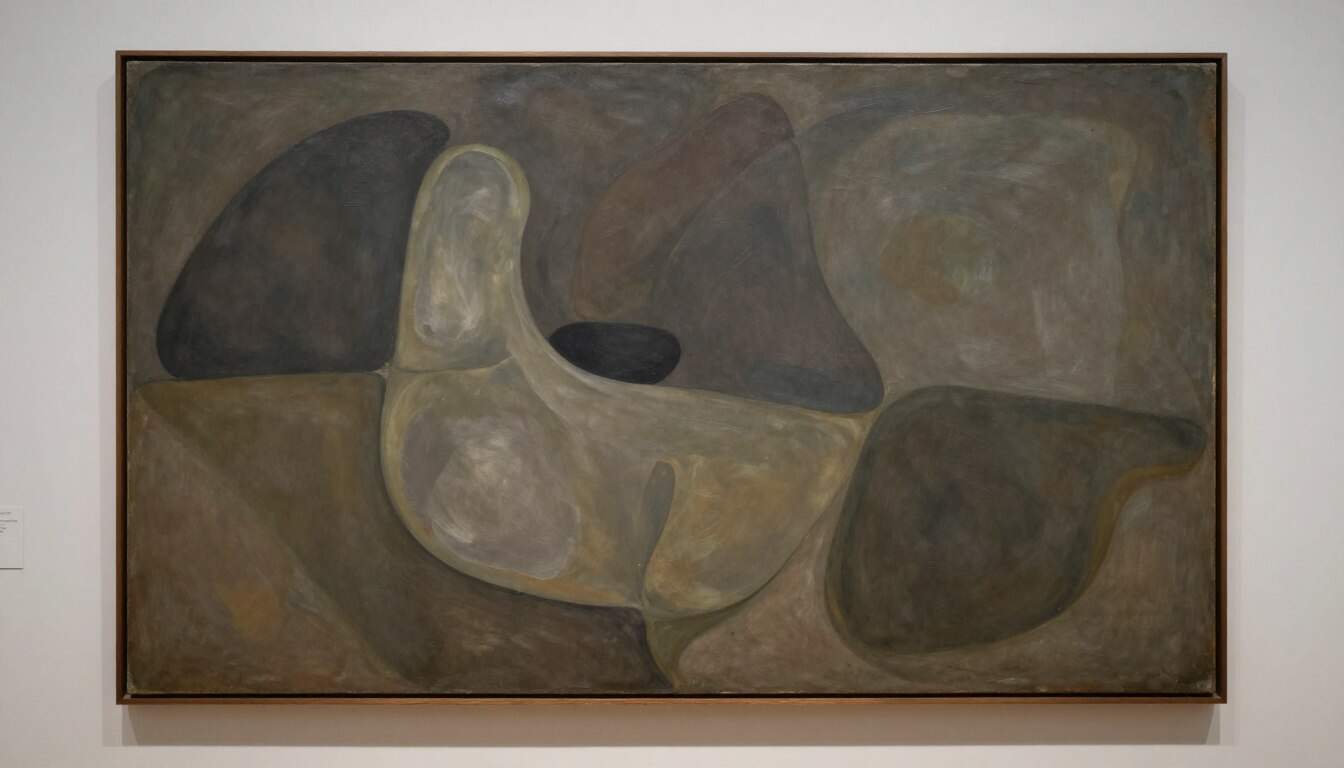
Early Mark Rothko painting from 1940s showing surrealist biomorphic forms
Born Marcus Rotkovich in Dvinsk (modern-day Latvia) in 1903, the artist immigrated to Portland, Oregon at age ten. His father's death less than a year after arrival left the family struggling. Young Rothko faced discrimination at Yale, where the university imposed quotas on Jewish students. He left without completing his degree, drifting to New York to "wander around, bum about, starve a bit."
The Mythological Period
During the 1940s, Rothko immersed himself in mythology, philosophy, and classical drama. He read Sir James Frazer's "The Golden Bough" and Freud's "The Interpretation of Dreams." These studies convinced him that mythological symbols transcended their literal meanings, tapping into universal human experiences. His paintings from this era feature abstracted figures, birds, and ritualistic scenes that hint at ancient stories without illustrating them directly.
The artist believed that American art had reached a dead end with its focus on urban and nature scenes. He wanted subjects that were topical yet beyond real life. "Without monsters and gods, art cannot enact a drama," he declared. This period taught him that powerful art required archetypal content stripped to essential emotional cores.
Early Period (1920s-1930s)
Figurative works influenced by Expressionism. Dark, moody urban scenes. Studies at the Art Students League under Arshile Gorsky.
Mythological Period (1940s)
Surrealist-influenced abstractions. Biomorphic shapes suggesting ancient rituals. Transition toward pure abstraction begins.
Classical Period (1949-1970)
Signature color field style emerges. Floating rectangles in luminous colors. Focus on scale and emotional resonance.
The Breakthrough: Multi-Forms
In 1947, Rothko discovered the technique that would define his legacy. His multi-form paintings featured soft-edged blocks of color floating against unified backgrounds. These transitional works bridged his surrealist past and abstract future. The shapes still suggested organic forms—clouds, landscapes, horizons—but increasingly rejected representation.
Within two years, the multi-forms evolved into the classic rectangular compositions. The artist had found his language. These weren't illustrations of emotion. They were emotion itself, made visible through color relationships and scale. Critics dubbed the approach "Color Field painting," though Rothko resisted the label as limiting.
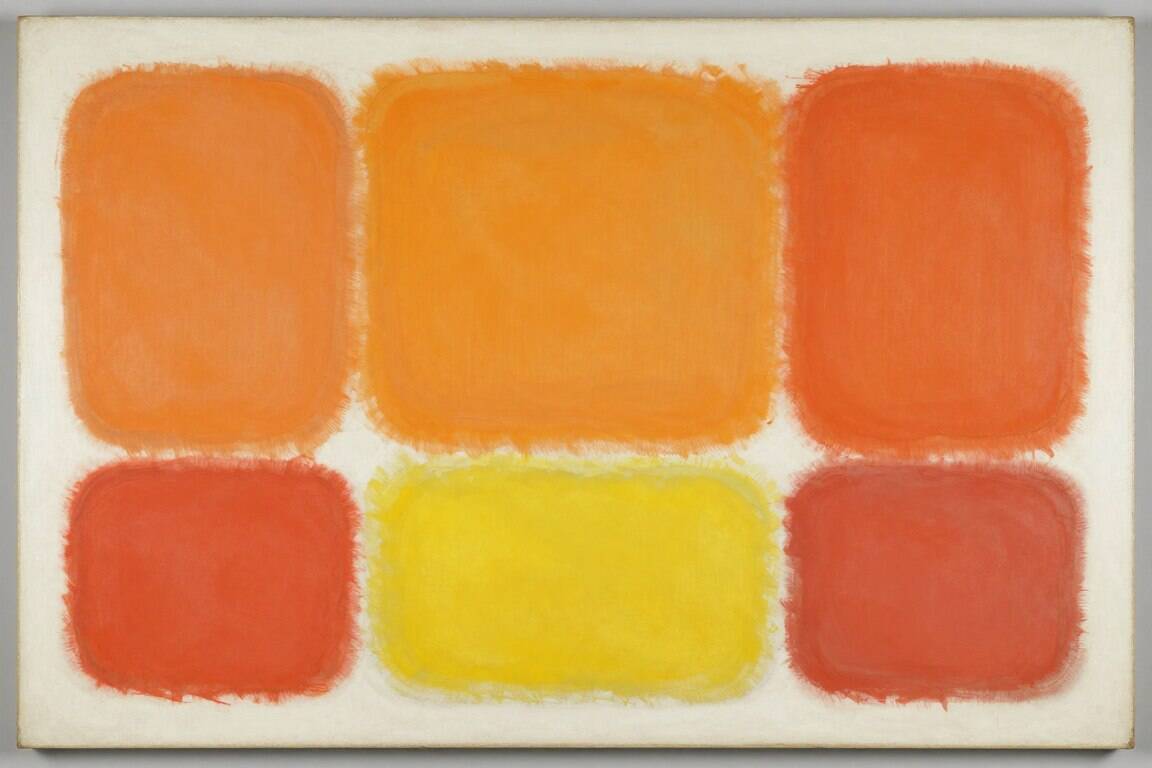
Mark Rothko multi-form painting from transitional period 1947-1948
Deconstructing the Color Field Technique
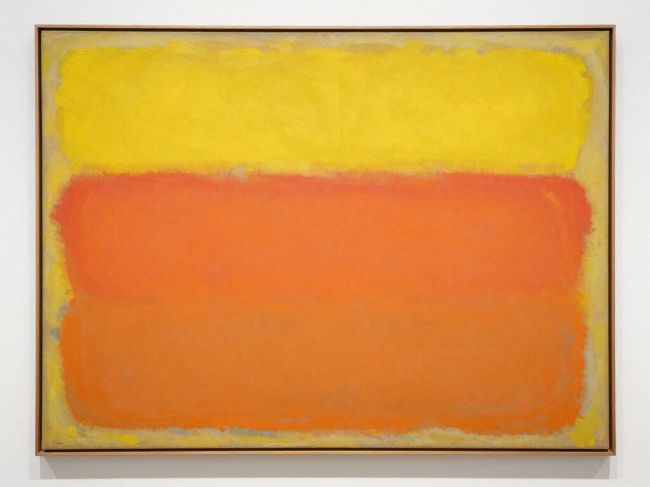
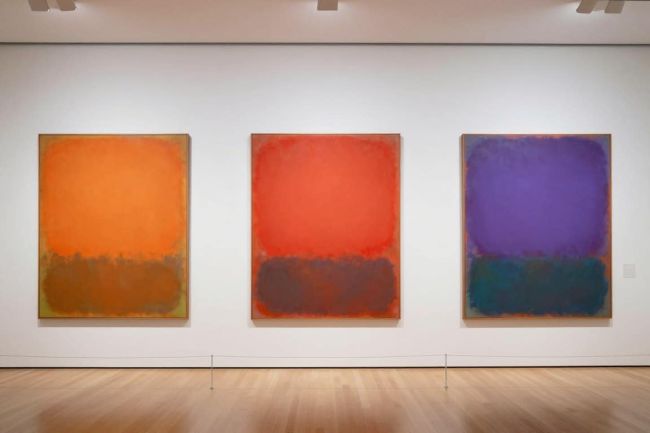
The color field paintings that made Rothko famous employ a consistent structure hiding infinite variation. Most canvases present two or three horizontal rectangles stacked vertically, floating against a unified background. The rectangles never touch the canvas edges. They hover in an undefined space, creating tension between figure and ground.
Rothko's color choices weren't arbitrary. Early color field works burst with bright yellows, oranges, and reds. These vibrant compositions radiate optimism and energy. As years passed, the palette darkened. Deep purples, browns, and blacks dominated his later work, reflecting the artist's declining mental health and growing preoccupation with mortality.
The Technical Process of Mark Rothko Color Field paintings
Creating a Rothko painting required weeks of patient layering. The artist worked on unprimed canvas, allowing pigments to soak into the fabric. He mixed paints with various binders—rabbit-skin glue, whole eggs, dammar varnish—to achieve different levels of transparency and sheen.
Each layer dried before the next application. Rothko built up colors gradually, sometimes applying more than twenty separate coats. The fuzzy edges resulted from careful brushwork that blended boundaries while the paint remained wet. This technique created the signature effect of forms that seem to advance and recede simultaneously.
The physical process proved grueling. Rothko worked on large canvases without assistants for most of his career. He stood for hours, carefully applying paint with large house-painting brushes. The scale of the work demanded physical endurance matching the emotional intensity it sought to convey.
Color Relationships and Emotional Impact
Rothko understood that colors interact psychologically as much as optically. Placing a dark purple rectangle above a deep red creates a different emotional tenor than stacking them in reverse. The artist experimented endlessly with these relationships, seeking combinations that would trigger specific feelings without narrative content.
- Warm colors (reds, oranges, yellows) in bright compositions suggested vitality and transcendence
- Cool darks (purples, deep blues, blacks) evoked contemplation and mortality
- Contrasting values created tension between elements
- Similar tones produced harmony and unity
- The background color determined the overall emotional atmosphere
The paintings demand specific viewing conditions. Rothko preferred dimly lit spaces where the canvases' internal luminosity could emerge. Harsh lighting flattened the subtle layering and destroyed the hovering effect. Many museums now follow his recommendations, presenting the works in contemplative spaces designed for extended viewing.
Experiencing these paintings in private collections offers a unique intimacy impossible in crowded museums. Living daily with Rothko's emotional power transforms the work from public spectacle to personal meditation. Collectors and enthusiasts interested in bringing this emotional resonance into private collections discover how the paintings evolve through sustained engagement, revealing new depths over time.
The Seagram Murals and Houston Chapel
Two major commissions tested Rothko's artistic vision and revealed his uncompromising standards. In 1958, the beverage company Joseph Seagram and Sons hired him to create murals for the Four Seasons restaurant in New York. The commission offered substantial payment and prestige. Rothko accepted, seeing an opportunity to create environmental art that would trap viewers in an inescapable emotional experience.
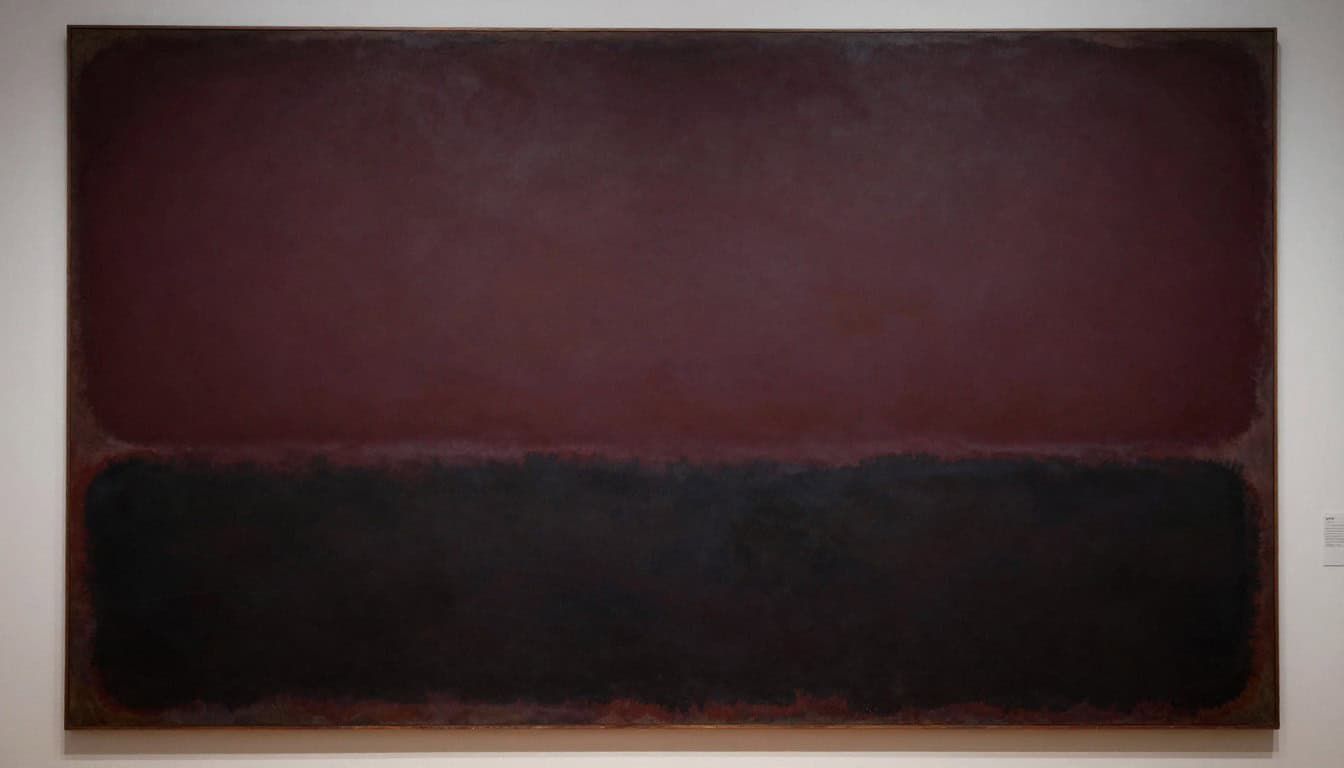
Mark Rothko Seagram Mural panel in dark reds and blacks
Over three months, the artist completed forty paintings. He changed his usual horizontal format to vertical compositions that would complement the restaurant's architecture. Rothko later described his intent: he wanted patrons to feel they'd lost their appetite and were trapped in the building. His inspiration came from Michelangelo's Laurentian Library in Florence, which created a sensation of being walled shut.
The Four Seasons Rejection
Before installation, Rothko visited the nearly completed restaurant. The experience repulsed him. He found the luxury establishment pretentious and incompatible with his work's serious intent. Despite completing the paintings and receiving partial payment, he withdrew from the commission. The artist returned the money and kept the panels in storage.
This decision exemplified Rothko's integrity. He refused to compromise his vision for commercial success or social prestige. The Seagram Murals eventually found homes in three museums: Tate Britain in London, Japan's Kawamura Memorial Museum, and the National Gallery of Art in Washington, D.C. These institutions provided the contemplative context Rothko demanded.
The Rothko Chapel in Houston
The artist's final major project offered the ideal commission. In 1964, collectors John and Dominique de Menil hired Rothko to create paintings for a nondenominational chapel in Houston, Texas. Given his lifelong interest in religious experience and sacred architecture, the project perfectly matched his artistic goals.
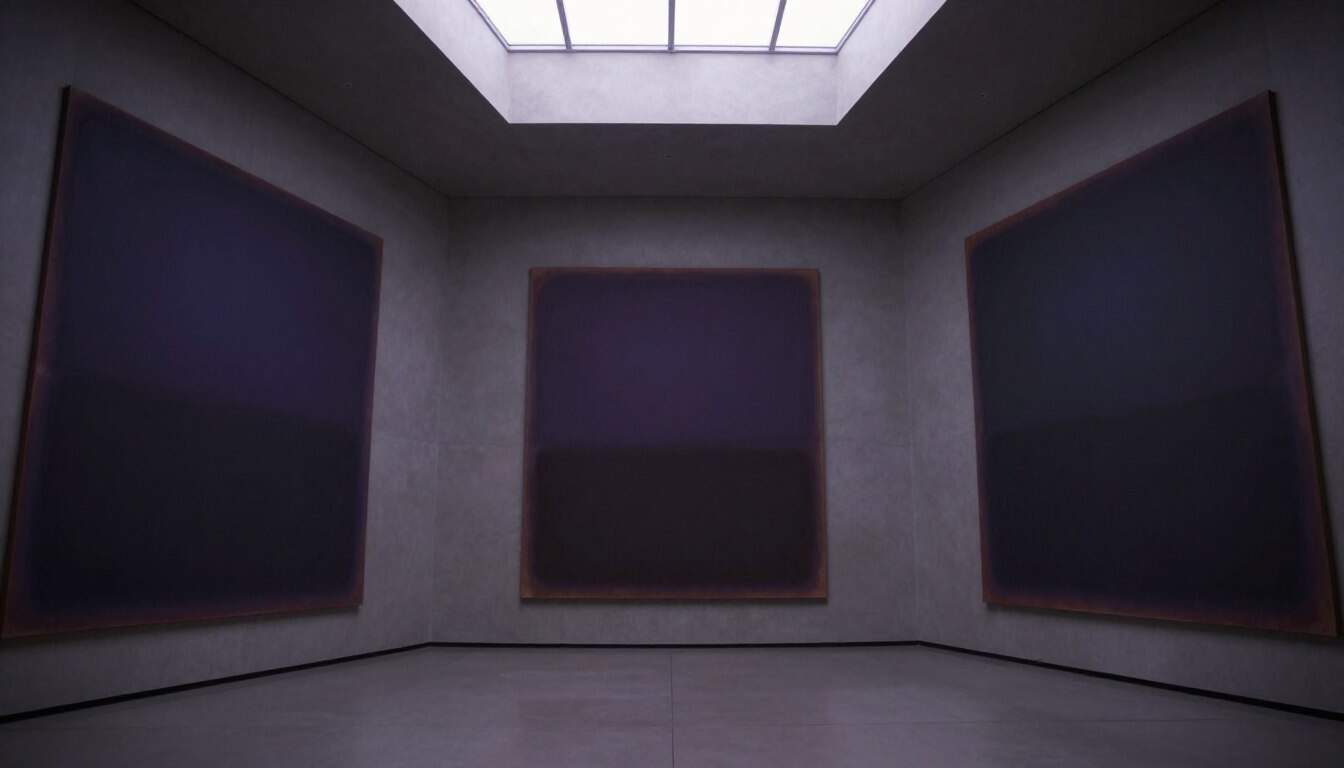
Rothko designed fourteen large-scale paintings in deep purples, blacks, and maroons for the octagonal sanctuary. The dark palette created an atmosphere of profound contemplation. These canvases became his most successful attempt to create purely spiritual art divorced from specific religious doctrine.
Chapel Design Principles
Rothko's vision for the Houston chapel encompassed every detail.
- Octagonal structure creating unified space
- Natural skylight providing changing illumination
- Dark paintings absorbing and reflecting light
- Elimination of distracting architectural elements
Spiritual Intent
The chapel served as Rothko's ultimate statement on art's transcendent power.
- Non-denominational sacred space
- Art as doorway to infinite contemplation
- Dark colors suggesting the beyond
- Scale overwhelming individual consciousness
Tragically, Rothko didn't live to see the chapel completed. In 1968, he suffered an aortic aneurysm that limited his physical capabilities. His marriage dissolved in 1969. Depression and illness plagued his final year. In February 1970, the artist died by suicide in his New York studio. The chapel opened the following year as a monument to his vision.
Dominique de Menil spoke at the dedication: "Like all great artists who follow an inner call, he sacrificed everything superfluous to his vision. The message he had to deliver was a timeless one." The chapel remains a pilgrimage site for those seeking the spiritual dimension of abstract art, welcoming visitors regardless of faith tradition.
Interior of Rothko Chapel Houston showing dark paintings and skylight
How to Experience Rothko: The Essential Viewing Guide
Rothko's paintings cannot be fully appreciated through reproductions. The scale, luminosity, and subtle color variations disappear in photographs. The artist himself insisted on specific viewing conditions that many casual museum visitors miss. Understanding how to properly experience these works transforms them from pleasant abstractions into overwhelming emotional encounters.
Optimal Viewing Distance and Position
Stand eighteen inches from the canvas surface. This proximity may feel uncomfortable in a museum context, but it's essential. At this distance, the painting fills your peripheral vision. The edges vanish. You exist inside the color field rather than observing it from outside. The hovering effect only functions at close range.
Rothko painted for viewers willing to slow down and submit to the work. He recommended spending at least fifteen minutes with each painting. The first few minutes allow your eyes to adjust. The colors shift. Relationships emerge. Buried layers reveal themselves. The emotional impact builds gradually, reaching a crescendo only after extended engagement.
Viewing Recommendations from the Artist: Rothko specified that his paintings should be hung low on walls, bringing the bottom edge close to floor level. This placement increases the sense of the forms hovering in space rather than hanging as conventional pictures. Soft, indirect lighting preserves the paintings' internal glow. Harsh spotlights destroy the subtle layering that creates depth.—
Common Viewing Mistakes
Many first-time viewers approach Rothko's work with inappropriate expectations. They search for hidden images or symbolic meanings. They snap quick photos and move to the next gallery. They view the paintings from across the room, treating them like conventional wall decorations. All these approaches prevent genuine engagement with the work.
- Standing too far away reduces paintings to decorative color arrangements
- Viewing too quickly prevents the slow revelation of buried colors
- Searching for "meaning" blocks direct emotional response
- Comparing paintings intellectually rather than feeling each individually
- Ignoring the physical environment and lighting conditions
The paintings reward patience and openness. They punish intellectual analysis and aesthetic judgment. Rothko wanted viewers who would surrender to the experience rather than dissecting it. This surrender proves difficult for contemporary audiences trained to consume art quickly and move on.
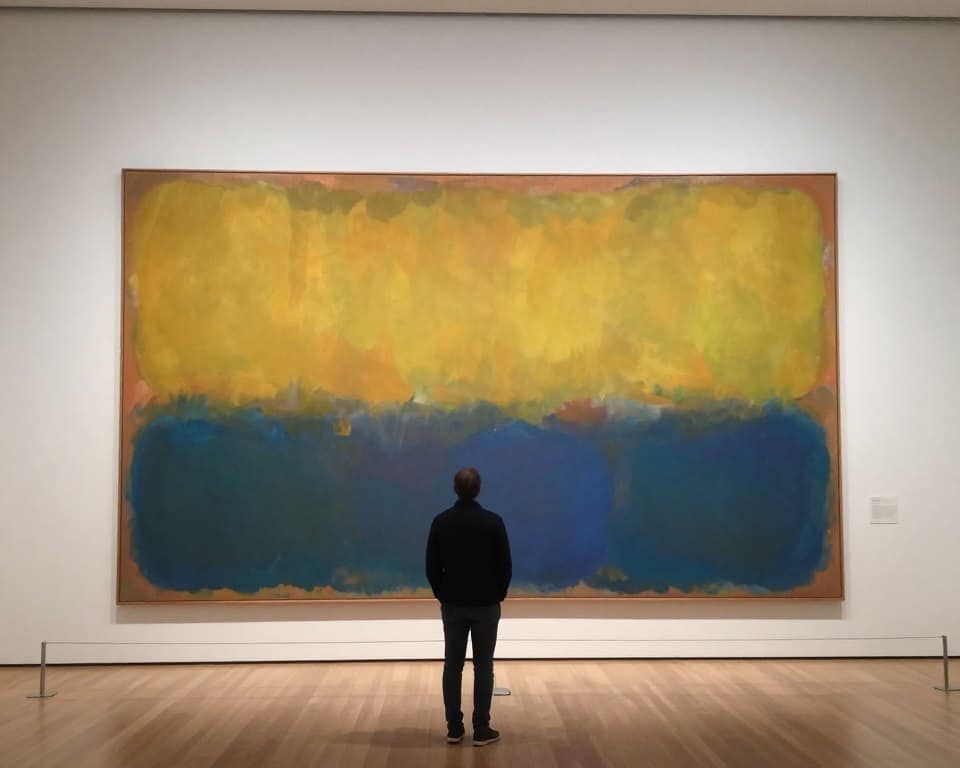
Museum visitor standing close to large Mark Rothko painting
Rothko's Enduring Impact on Contemporary Art
The influence of Mark Rothko extends far beyond the history of abstract expressionism. His insistence that abstract art could communicate basic human emotions validated entire movements. Minimalism, Color Field painting as a broader category, and installation art all owe debts to his innovations. Artists working today continue wrestling with questions he raised about art's purpose and emotional power.
Rothko's market value reflects his cultural significance. His paintings regularly sell for tens of millions of dollars at auction. Museums compete to acquire major works. Yet this commercial success would likely have disturbed the artist, who saw his work as fundamentally opposed to materialistic values and social display.
Critical Reception Across Decades
Early critics divided sharply on Rothko's achievements. Some praised his ability to create profound feeling through pure abstraction. Others dismissed the work as simplistic or pretentious. The 1961 retrospective at the Museum of Modern Art in New York cemented his reputation among serious critics, though popular audiences remained skeptical.
Contemporary viewers often experience Rothko differently than his peers did. We encounter his work in a world saturated with abstract imagery. Corporate logos, digital interfaces, and contemporary art have familiarized the public with non-representational forms. This familiarity can make Rothko's paintings seem less radical than they were in the 1950s.
Key Exhibitions and Recognition
Major exhibitions shaped Rothko's reputation during his life and posthumously. The 1952 "15 Americans" show at MoMA introduced his color field style to wider audiences. His 1958 Venice Biennale representation brought international recognition. The 1961 MoMA retrospective established him as a major American artist.
After his death, major institutions mounted comprehensive surveys of his work. These exhibitions revealed the depth and sophistication of his practice. Viewers could trace his evolution from figurative painter to color field master. The Seagram Murals and Chapel paintings received particular attention as his most ambitious statements.
Artistic Descendants and Influences
Countless contemporary artists cite Rothko as an influence. Minimalists like Donald Judd and Dan Flavin extended his interest in phenomenological experience. Light and Space artists such as James Turrell pursued his investigations of perception and transcendence. Even artists working in representational modes acknowledge his demonstration that painting could communicate directly without depicting.
The emotional authenticity Rothko demanded influenced performance art, conceptual practices, and installation work. His example legitimized art that prioritized feeling over form, experience over object. The class of work focused on viewer experience rather than static artifact owes much to his pioneering efforts.
Living with Rothko: The Paintings in Contemporary Life
How do Rothko's Color Field paintings function in the modern world? Museums preserve and display his major works, but the paintings' emotional power extends beyond institutional settings. Collectors who live with Rothko reproductions report transformative experiences. The paintings become daily companions, offering comfort during difficult times and amplifying joy during celebrations.
The scale that makes Rothko's work powerful in museums also suits residential spaces. Large living areas, offices, and meditation rooms can accommodate the generous dimensions his vision required. Unlike figurative art that can become tiresome through familiarity, Rothko's abstractions reveal new aspects over years of viewing. The play of changing light throughout days and seasons animates the colors differently.
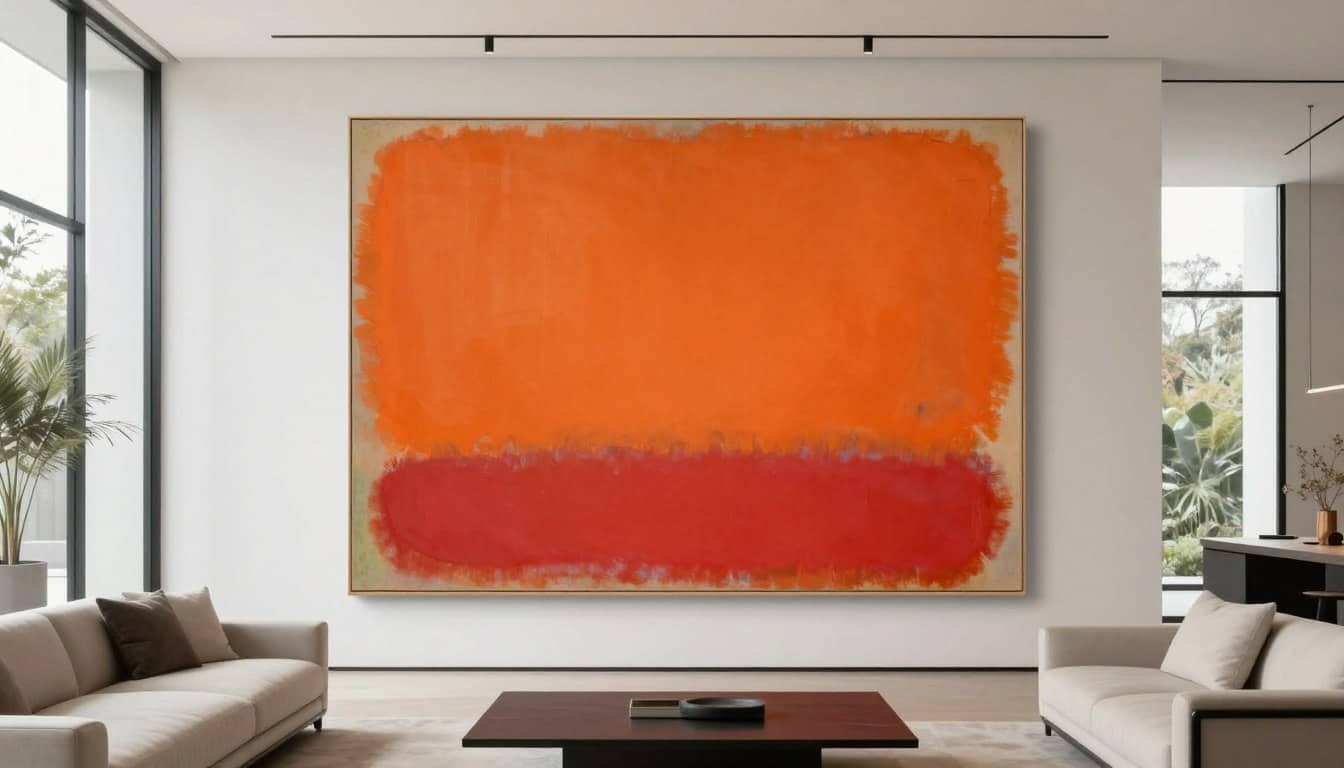
Modern interior with Mark Rothko Color Field painting reproduction
The Accessibility Question
Original Rothko paintings remain inaccessible to most people. Museums own the major works. Private collectors guard their acquisitions carefully. Few individuals will ever stand before an authentic Rothko in their own home. This reality raises questions about how to preserve the artist's vision while acknowledging practical limitations.
High-quality reproductions offer a solution, though one requiring careful consideration. The best reproductions attempt to capture the layered quality and luminosity of the originals through advanced printing techniques and hand-finishing. While they cannot fully replicate Rothko's painstaking process, they can convey the color relationships and emotional impact that defined his work.
Rothko in Digital Culture
The digital age presents unique challenges for experiencing Rothko. Screens cannot reproduce the luminosity and texture of oil paint. The scale disappears. Viewing on phones reduces monumental canvases to thumbnails. Yet digital reproductions introduce new audiences to the artist's work, creating curiosity that may lead to museum visits.
Social media has made Rothko's paintings ubiquitous in ways he could not have imagined. Instagram posts show people posing before his works. Pinterest boards collect color palettes inspired by his paintings. This popularization democratizes access while potentially trivializing the profound experiences the artist intended.
Appreciating Rothko: From Museum to Home
For those drawn to Rothko's emotional power, the question becomes how to maintain connection with his vision. Regular museum visits offer authentic encounters with original paintings. Building a library of quality art books provides opportunities for study and reflection. Engaging with the extensive scholarly literature deepens understanding of his techniques and intentions.
Art reproductions serve different purposes than originals. They function as daily reminders of artistic values and emotional truths. They create opportunities for meditation and reflection. They transform living spaces into contemplative environments. The key lies in approaching reproductions with realistic expectations and genuine appreciation rather than as substitutes for museum experiences.
Selecting Rothko-Inspired Art
Key factors for evaluating color field reproductions.
- Color accuracy and vibrance matching original palettes
- Appropriate scale for achieving visual immersion
- Surface quality suggesting paint depth and texture
- Proper framing that preserves canvas edges
Display Considerations
Environmental factors affect how color field paintings function.
- Soft, indirect lighting preserving luminosity
- Low hanging position emphasizing hovering effect
- Uncluttered surrounding space avoiding distraction
- Viewing distance allowing peripheral immersion
The paintings work best in spaces dedicated to contemplation rather than social activity. A meditation room, private study, or quiet bedroom provides ideal context. Areas with heavy traffic or competing visual stimulation diminish their impact. The goal is creating opportunities for the slow, sustained viewing Rothko's work demands.
The Enduring Power of Color and Emotion
Mark Rothko's Color Field paintings remain among the most moving achievements in modern art. His insistence that abstract forms could express basic human emotions proved prophetic. Decades after his death, viewers continue experiencing the profound responses he intended. The paintings haven't lost their power to move, challenge, and transform those willing to engage deeply with them.
Understanding the meaning of Rothko paintings requires surrendering conventional expectations about art. These aren't decorative objects or intellectual puzzles. They function as portals to emotional states that words cannot describe. The artist created a visual language for feelings that exist beyond articulation—the weight of existence, the possibility of transcendence, the beauty of pure sensation.
His contribution to the history of abstract expressionism extends beyond stylistic innovation. Rothko demonstrated that abandoning representation didn't mean abandoning humanity. His work proved that paintings could be more profound by suggesting less, more universal by refusing specificity. The floating rectangles became mirrors reflecting viewers' own emotional depths back to them.
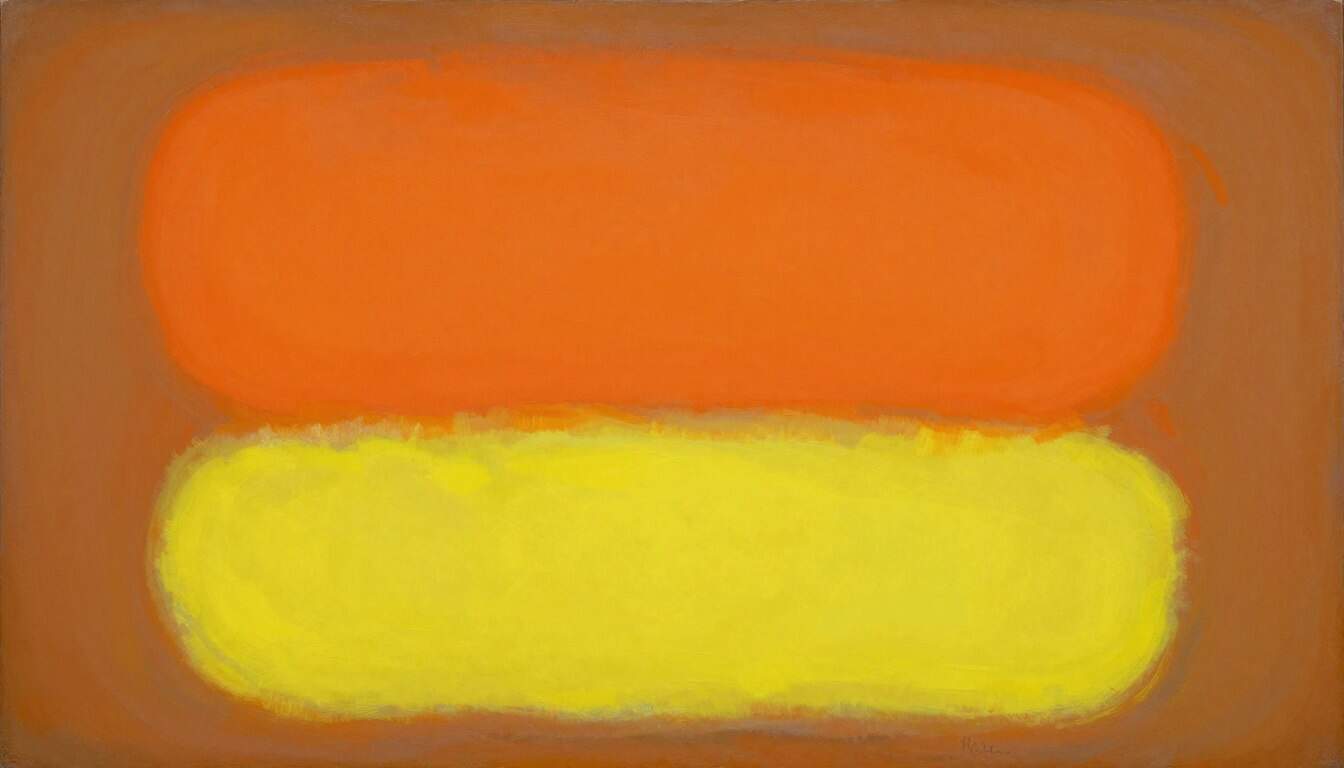
Iconic Mark Rothko orange and yellow Color Field painting
Living with Rothko's vision—whether through museum visits, scholarly study, or personal collections—enriches contemporary life. The paintings offer respite from information overload and visual chaos. They demand presence and attention in an age of distraction. They insist that feeling matters as much as thinking, that art serves purposes beyond entertainment or status display.
The artist's legacy continues influencing how we understand art's capacity to move us. His life story, from immigrant child to celebrated painter to tragic figure, adds poignancy to the work without defining it. The paintings transcend biography, speaking to universal human experiences that cross cultures and generations. They remain vital precisely because they refuse easy interpretation, inviting endless engagement and discovery.
For those seeking to deepen their relationship with Rothko's artistic vision, opportunities exist beyond museum walls. The emotional resonance that defines his greatest achievements can become part of daily life, offering sustained engagement with one of the twentieth century's most profound artistic voices.
Experience Rothko's Emotional Vision
Discover how Mark Rothko's masterful use of color and scale can transform your space into a sanctuary of emotional resonance. Explore museum-quality reproductions that honor the artist's revolutionary vision and bring the power of abstract expressionism into your daily life.
Explore Rothko Collection