Free and safe Shipping
| Size | Museum Quality Artworks Hand-Painted with oil paint |
|---|---|
| 23.6 x 18 in 60x48 cm |
$ 504.00 Add to Cart |
| 32 x 24 in 80x63 cm |
$ 707.00 Add to Cart
|
| 40 x 31 in 100cm x 79 cm |
$ 994.00 Add to Cart |
| 4 x 3.1 ft or 47 ¼ x 37 in 120cm x 95 cm |
$ 1278.00 Add to Cart |
| 5 x 3.9 ft or 59 x 46 in 150cm x 119 cm |
$ 1750.00 Add to Cart |
| 6.6 x 5.2 ft or 78 ¾ x 62 in 200cm x 159 cm |
$ 2671.00 Add to Cart |
| 8.16 x 6.5 ft or 98 ½ x 77 in 250cm x 198 cm |
$ 3465.00 Add to Cart |
| 9.8 x 7.8 ft 300cm x 238 cm |
$ 4998.00 Add to Cart |
| 13.12 x 10.4 ft 400cm x 317 cm |
$ 8876.00 Add to Cart |
| 16.4 x 13.0 ft 500cm x 396 cm |
$ 13860.00 - 20% off $ 11088.00 Add to Cart |
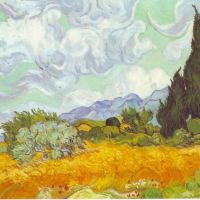
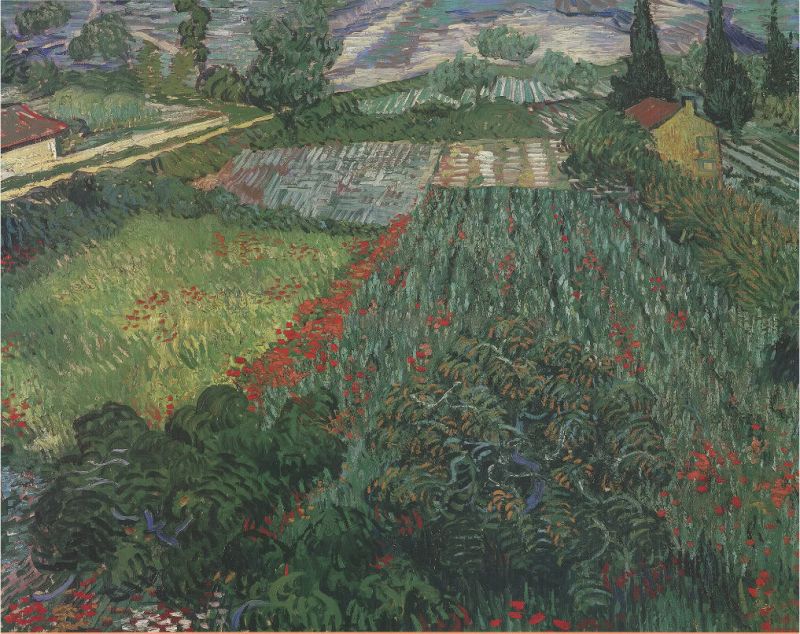
Museum-quality hand-painted artwork Van Gogh, Field with Poppies aka Champ de coquelicots
Museum-quality replicas by Paolo: Exceptional product, accurate to the tiniest details, textures and values. Requires skills and time to process, but gives astonishing results. A true work of art for the real connoisseurs.
Buy Van Gogh, Field with Poppies aka Champ de coquelicots museum quality
This lush, sweeping landscape is titled "Field with Poppies" (also known as Champ de coquelicots), painted by Vincent van Gogh in June 1889. Created during his stay at the Saint-Paul-de-Mausole asylum in Saint-Rémy-de-Provence, it captures the vibrant, almost chaotic beauty of the French countryside in early summer.
-
Title: Field with Poppies (Champ de coquelicots)
-
Artist: Vincent van Gogh
-
Date: June 1889 (Saint-Rémy Period)
-
Medium: Oil on canvas
-
Dimensions: 71 cm x 91 cm
-
Location: Kunsthalle Bremen, Germany
1. The Power of Complementary Colors: Van Gogh was a master of color theory, and here he utilizes the red-green contrast to its fullest potential. The bright red poppies "vibrate" against the verdant green fields, creating an optical shimmer that mimics the effect of bright sunlight hitting the eyes.
2. Composition and Perspective:
-
High Horizon: Typical of his later landscapes, the horizon is pushed toward the top of the canvas. This forces the viewer's eye to wander through the intricate textures of the foreground and middle ground.
-
Enclosure: The scene depicts the fields Van Gogh could see from the asylum, often framed by the Alpilles mountains. The small yellow house and the vertical cypress trees provide "anchors" for the swirling energy of the flora.
3. Signature Brushwork: In the foreground bushes and trees, you can see Van Gogh’s move toward swirling, rhythmic impasto. The plants don't just sit there; they seem to be growing and moving in the wind. This "animism"—giving life to inanimate objects—is what defines his late-stage genius.
4. Emotional Context: Despite being confined to the asylum, this period was incredibly productive for Vincent. This painting reflects a moment of clarity and connection with nature, contrasting the "inner storm" he often felt with the outer beauty of the Provencal summer.