Free and safe Shipping
| Size | Museum Quality Artworks Hand-Painted with oil paint |
|---|---|
| 23.6 x 19 in 60x49 cm |
$ 515.00 Add to Cart |
| 32 x 25 in 80x66 cm |
$ 739.00 Add to Cart
|
| 40 x 32 in 100cm x 82 cm |
$ 1033.00 Add to Cart |
| 4 x 3.2 ft or 47 ¼ x 38 in 120cm x 99 cm |
$ 1330.00 Add to Cart |
| 5 x 4.0 ft or 59 x 48 in 150cm x 123 cm |
$ 1810.00 Add to Cart |
| 6.6 x 5.4 ft or 78 ¾ x 64 in 200cm x 165 cm |
$ 2772.00 Add to Cart |
| 8.16 x 6.8 ft or 98 ½ x 81 in 250cm x 206 cm |
$ 3605.00 Add to Cart |
| 9.8 x 8.1 ft 300cm x 247 cm |
$ 5187.00 Add to Cart |
| 13.12 x 10.8 ft 400cm x 329 cm |
$ 9212.00 Add to Cart |
| 16.4 x 13.5 ft 500cm x 412 cm |
$ 14420.00 - 20% off $ 11536.00 Add to Cart |
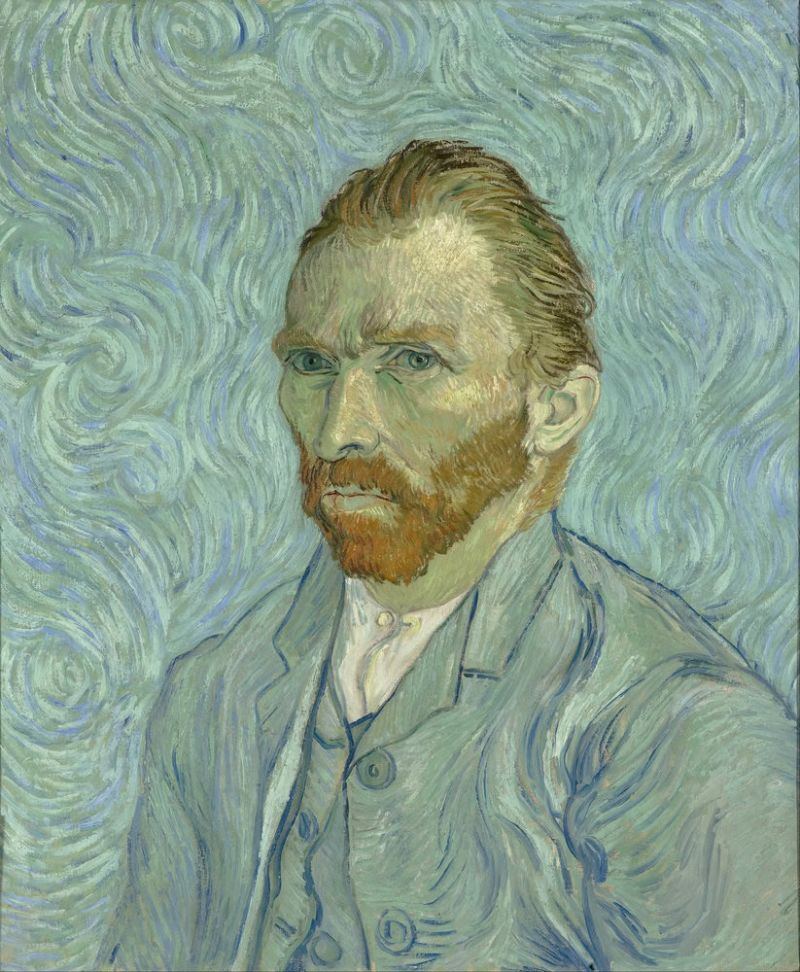
Museum-quality hand-painted artwork Van Gogh, Self-Portrait (Portrait de l'artiste) - 1889
Museum-quality replicas by Paolo: Exceptional product, accurate to the tiniest details, textures and values. Requires skills and time to process, but gives astonishing results. A true work of art for the real connoisseurs.
Buy Van Gogh, Self-Portrait (Portrait de l'artiste) - 1889 museum quality
This iconic image is arguably the most famous of Vincent van Gogh's self-portraits. Painted in September 1889 at the Saint-Paul-de-Mausole asylum in Saint-Rémy-de-Provence, it is a haunting masterpiece of psychological depth and technical innovation.
-
Title: Self-Portrait (Portrait de l'artiste)
-
Artist: Vincent van Gogh (1853–1890)
-
Date: September 1889
-
Medium: Oil on canvas
-
Dimensions: 65 cm x 54.2 cm
-
Location: Musée d'Orsay, Paris
1. Hallucination and Movement: The most striking feature of this work is the swirling, rhythmic background. The arabesque patterns are not merely decorative; they reflect the artist’s inner "turbulence" and mental state. These same vortex-like strokes are found in The Starry Night, painted during the same period, suggesting a unified vision of a world in constant, vibrating motion.
2. The Gaze: Van Gogh presents himself with a penetrating, fixed gaze. Unlike earlier portraits where he may look weary or broken, here he appears intensely alert. His eyes, rimmed with the same pale green as his jacket, seem to look both inward at his own thoughts and outward with a challenging stare.
3. Color Harmony and Contrast:
-
Monochromatic Tones: The painting is dominated by "absinthe" greens, pale turquoises, and cool blues.
-
The Focal Point: The cool background makes the fiery orange of his hair and beard leap off the canvas. This use of complementary colors is a signature of Van Gogh’s post-impressionist mastery.
-
Complexion: His skin tone is a mix of greens and ochres, echoing the colors of the environment and suggesting a lack of physical health, yet his expression remains stoic.
4. Impasto and Linearity: The paint is applied with extreme impasto—thick, raised ridges of pigment. Every brushstroke follows the anatomy of his face or the flow of the fabric, creating a sense of "sculpted" light. The lines of his jacket mirror the curls in the background, making the artist appear as if he is emerging directly from the energy of the room.