Free and safe Shipping
| Size | Museum Quality Artworks Hand-Painted with oil paint |
|---|---|
| 23.6 x 18 in 60x47 cm |
$ 494.00 Add to Cart |
| 32 x 24 in 80x62 cm |
$ 693.00 Add to Cart
|
| 40 x 30 in 100cm x 78 cm |
$ 984.00 Add to Cart |
| 4 x 3.1 ft or 47 ¼ x 36 in 120cm x 93 cm |
$ 1250.00 Add to Cart |
| 5 x 3.8 ft or 59 x 45 in 150cm x 116 cm |
$ 1705.00 Add to Cart |
| 6.6 x 5.1 ft or 78 ¾ x 61 in 200cm x 155 cm |
$ 2604.00 Add to Cart |
| 8.16 x 6.4 ft or 98 ½ x 76 in 250cm x 194 cm |
$ 3395.00 Add to Cart |
| 9.8 x 7.6 ft 300cm x 233 cm |
$ 4893.00 Add to Cart |
| 13.12 x 10.2 ft 400cm x 310 cm |
$ 8680.00 Add to Cart |
| 16.4 x 12.7 ft 500cm x 388 cm |
$ 13580.00 - 20% off $ 10864.00 Add to Cart |
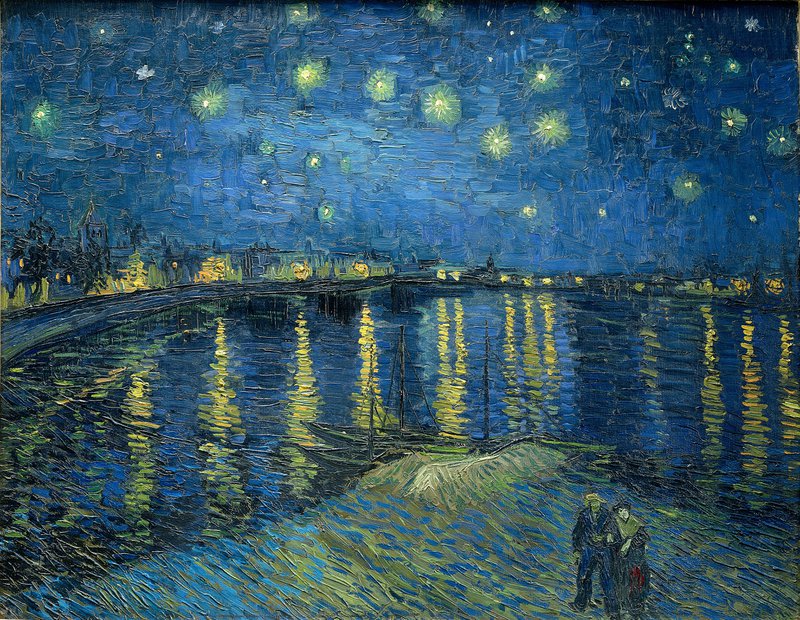
Museum-quality hand-painted artwork Van Gogh, Starry Night Over The Rhone
Museum-quality replicas by Paolo: Exceptional product, accurate to the tiniest details, textures and values. Requires skills and time to process, but gives astonishing results. A true work of art for the real connoisseurs.
Buy Van Gogh, Starry Night Over The Rhone museum quality
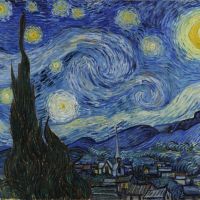
Painted in September 1888, "Starry Night Over the Rhône" is one of Vincent van Gogh’s most famous "night effects." Unlike the later, more turbulent The Starry Night (1889), this Arles-period masterpiece is characterized by a sense of serenity and the artist's fascination with the interplay between natural starlight and the newly introduced artificial gas lighting of the era.
-
Title: Starry Night Over the Rhône (Nuit étoilée sur le Rhône)
-
Artist: Vincent van Gogh
-
Date: September 1888 (Arles Period)
-
Medium: Oil on canvas
-
Dimensions: 72.5 cm x 92 cm
-
Location: Musée d'Orsay, Paris
1. The Interplay of Light: The painting is a masterclass in color contrast. Van Gogh uses the "harsh gold" of the gas lamps lining the quays of Arles to contrast with the "aquamarine" and "royal blue" of the sky and water. The long, vertical reflections of the lamps stretch across the river toward the viewer, creating a rhythmic, shimmering effect that connects the town to the foreground.
2. The Big Dipper (Ursa Major): Dominating the sky is the constellation of the Big Dipper. Interestingly, Van Gogh’s placement of the constellation is scientifically inaccurate—in the direction he was facing (southwest), the Big Dipper would have been behind him. This suggests he intentionally merged two viewpoints to include the iconic stars, seeking a "poetic truth" rather than photographic accuracy.
3. The Foreground Lovers: In the bottom right corner, a small couple strolls along the riverbank. Their presence adds a touch of human intimacy to the vast, cosmic landscape. They walk in a zone without harsh reflections, suggesting a private, quiet moment amidst the illuminated night.
4. Technique and Texture:
-
Plein Air Painting: Van Gogh famously painted this work outdoors at night, reportedly using candles stuck into his straw hat to see his canvas.
-
Impasto: The stars are applied with thick, circular brushstrokes that make them appear like glowing flowers or "sunflowers of the night."
-
Color Palette: Dominated by Prussian blue, ultramarine, and chrome yellow, the painting reflects his belief that "the night is even more richly colored than the day."
5. Historical Context: This work was painted just a short walk from the Yellow House on Place Lamartine. It represents a period of high optimism for Van Gogh, shortly before the arrival of Paul Gauguin and the subsequent mental health crisis that would change his style.